Stage 9 - Git Workflow and Best Practices
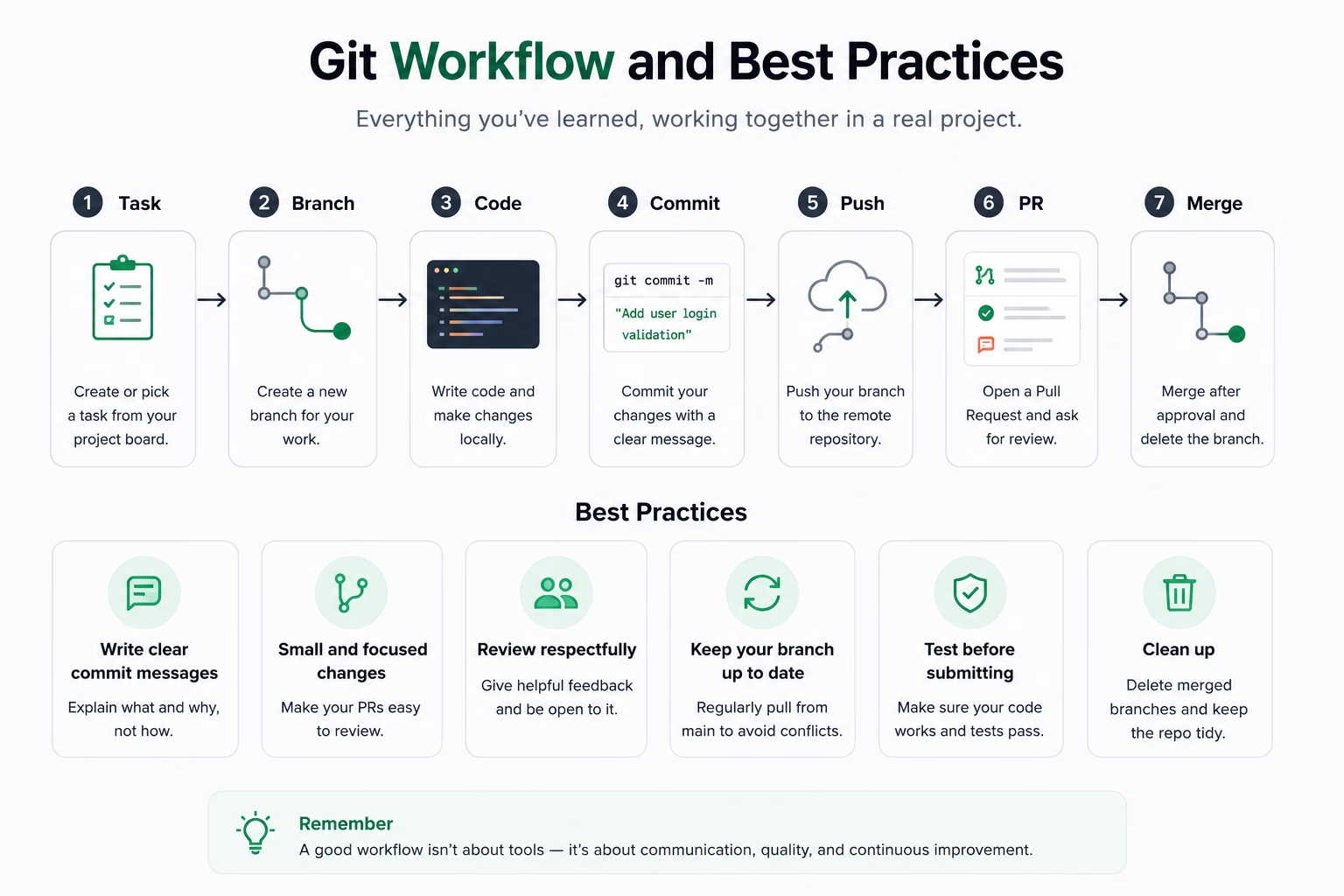
The last stage connects everything: repository, commits, diffing, branches, conflicts, remote, PR, and recovery become one production loop for task-service.
From single-person to team-safe process
A stable workflow answers three predictable questions before code is merged:
- From which branch did this come?
- Is intent clear in commit messages and PR description?
- Where are risks and tests?
For small teams with frequent releases, GitHub Flow usually works well:
mainremains deployable,- each change is one short-lived branch,
- branch opens PR,
- team reviews and merges when checks pass.
Commit messages as documentation
Use conventional-style prefixes to make history searchable:
feat: add task export filter
fix: prevent duplicate task titles
docs: update task ordering notes
test: add duplicate guard regression test
Full loop for Stage 9 exercise
Use your task-service and run this exact chain:
git switch main
git pull
git switch -c feature/task-export-csv
Then implement a concrete improvement in one file, commit with intent, push, and open PR.
git add task-service.js
git commit -m "feat: export tasks as CSV in deterministic order"
git push -u origin feature/task-export-csv
In review, reply to feedback by adding one or two follow-up commits to the same branch and pushing again.
Practical workflow guardrails
| Practice | Why it matters |
|---|---|
| Small branches | Faster review, safer rollback |
| One objective per branch | Cleaner diffs and easier approvals |
| Clear PR text | Less context loss across handover |
| Merge after checks/tests | Reduces production surprises |
Finishing the course sequence
By finishing this loop with task-service, you should be able to explain to a beginner:
- how commits are born on a branch,
- how they are reviewed through PR,
- how errors are recovered through revert/cherry-pick,
- how the remote sync and local work stay predictable.
This is not memorizing commands. It is maintaining confidence with a clear process.
Team-level stability pattern
A clean workflow is measurable. Track three outcomes per task:
- how many commits were opened to solve one feature,
- how many review comments were required,
- whether a rollback would need one commit or five.
If rollback needs many commits and repeated re-runs, you likely overloaded the feature scope. Split the work.
This final stage encourages you to connect process with outcomes: fewer surprises in main, clearer context in PRs, and predictable collaboration even when team members change.